I curate a massive list of ‘Autism Positive’ books (at the time of publishing this article it contains nearly 200 books!). And whilst that’s great for people who love to read it can be a bit daunting if you want to read good books about autism but don’t know where to start. To help you get started I’ve selected my Top 10 Academic Books About Autism and listed them below (in A-Z order by author name).
There is also a partner post to this list which is the Top 10 Non-Academic Books About Autism.
For each book I’ve provided a description of each book and a link to purchase fom Amazon UK and BookShop. If you purchase a book via my links I receive a small commission (you pay no more).
Please note that some of the older books may use outdated terminology, but still have something useful to say.
TOP 10 ACADEMIC BOOKS ABOUT AUTISM

- The Autism Industrial Complex: How Branding, Marketing, and Capital Investment Turned Autism into Big Business – Alicia Broderick
- Understanding and Evaluating Autism Theory – Nick Chown
- A Mismatch of Salience: Explorations of the Nature of Autism from Theory to Practice – Damian Milton
- Critical Autism Studies – Damian Milton, Sara Ryan
- Neurodiversity Reader: Exploring Concepts, Lived Experience and Implications for Practice – Damian Milton
- Autistic Masking: Understanding Identity Management and the Role of Stigma – Kieran Rose, Dr Amy Pearson
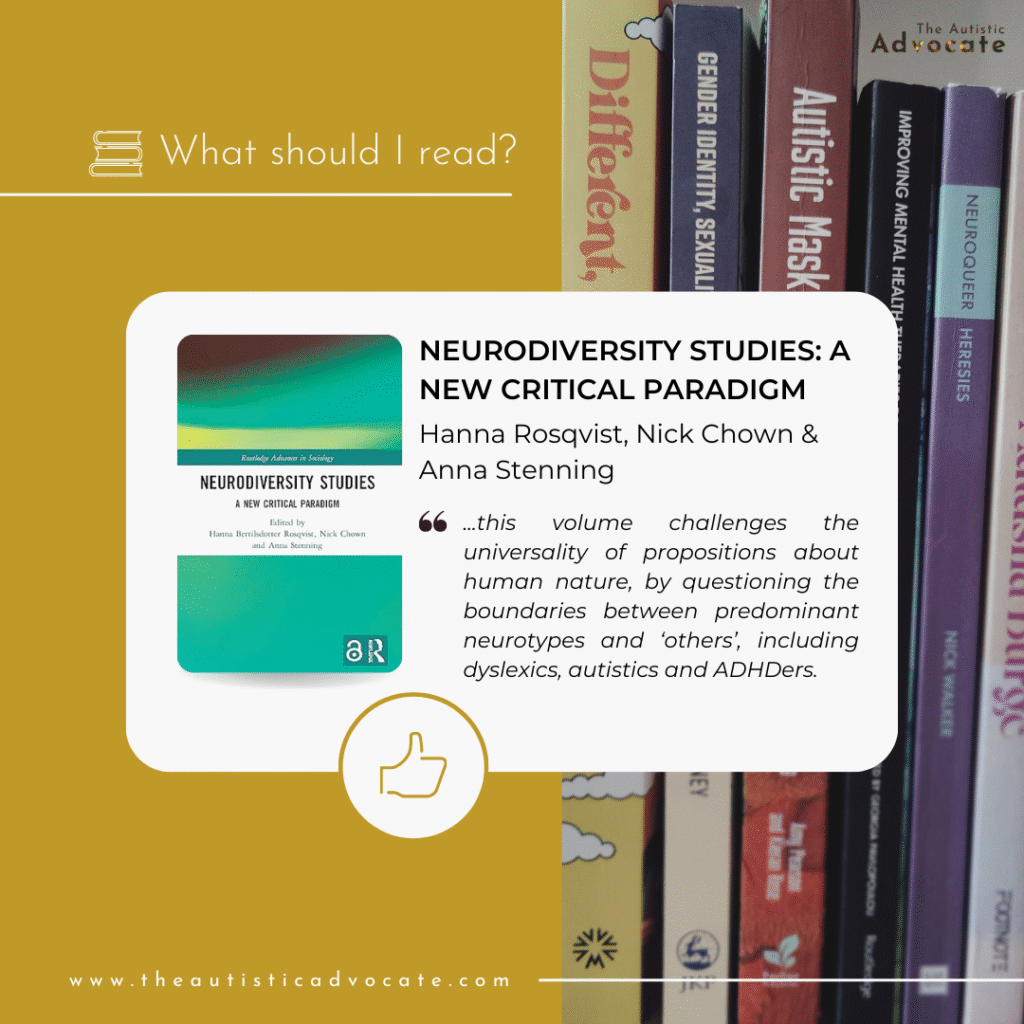
- Neurodiversity Studies: A New Critical Paradigm – Hanna Rosqvist, Nick Chown, Anna Stenning
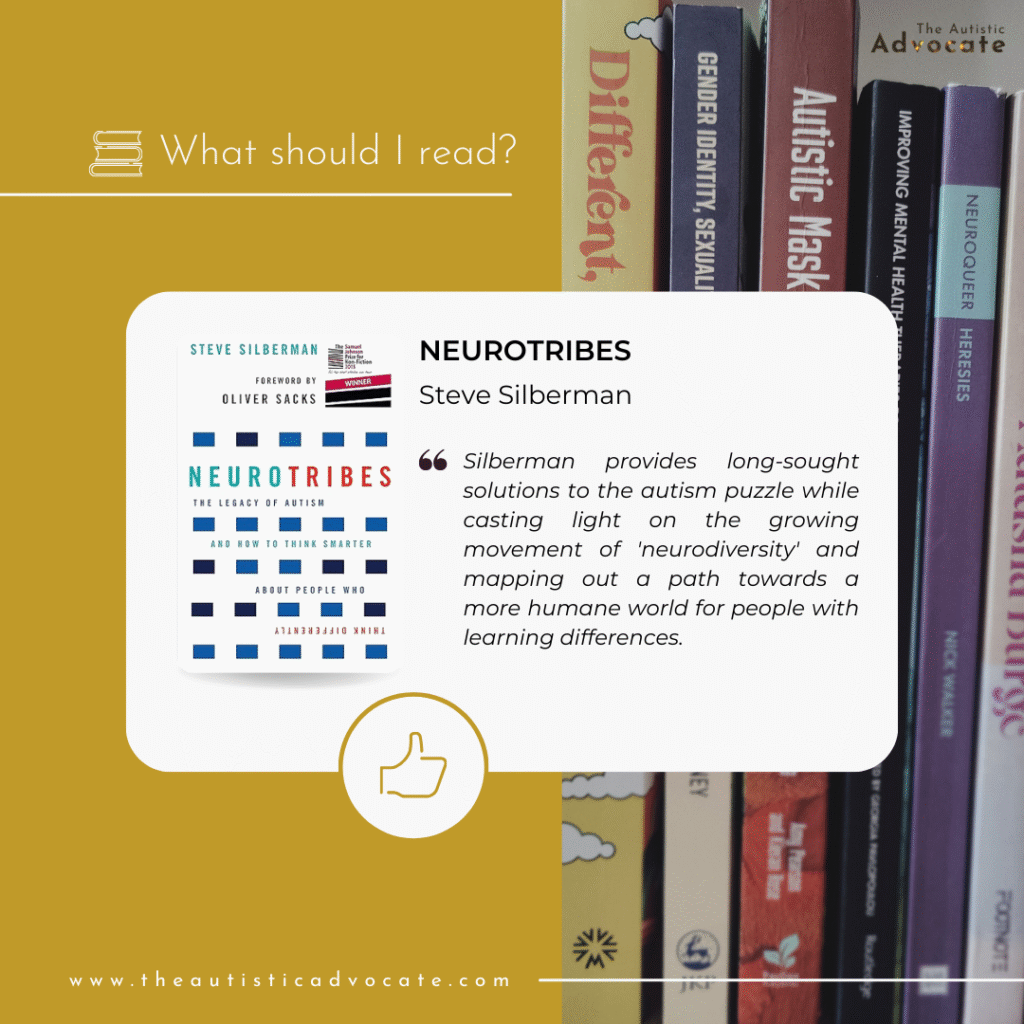
- NeuroTribes: The Legacy of Autism and How to Think Smarter About People Who Think Differently – Steve Silberman
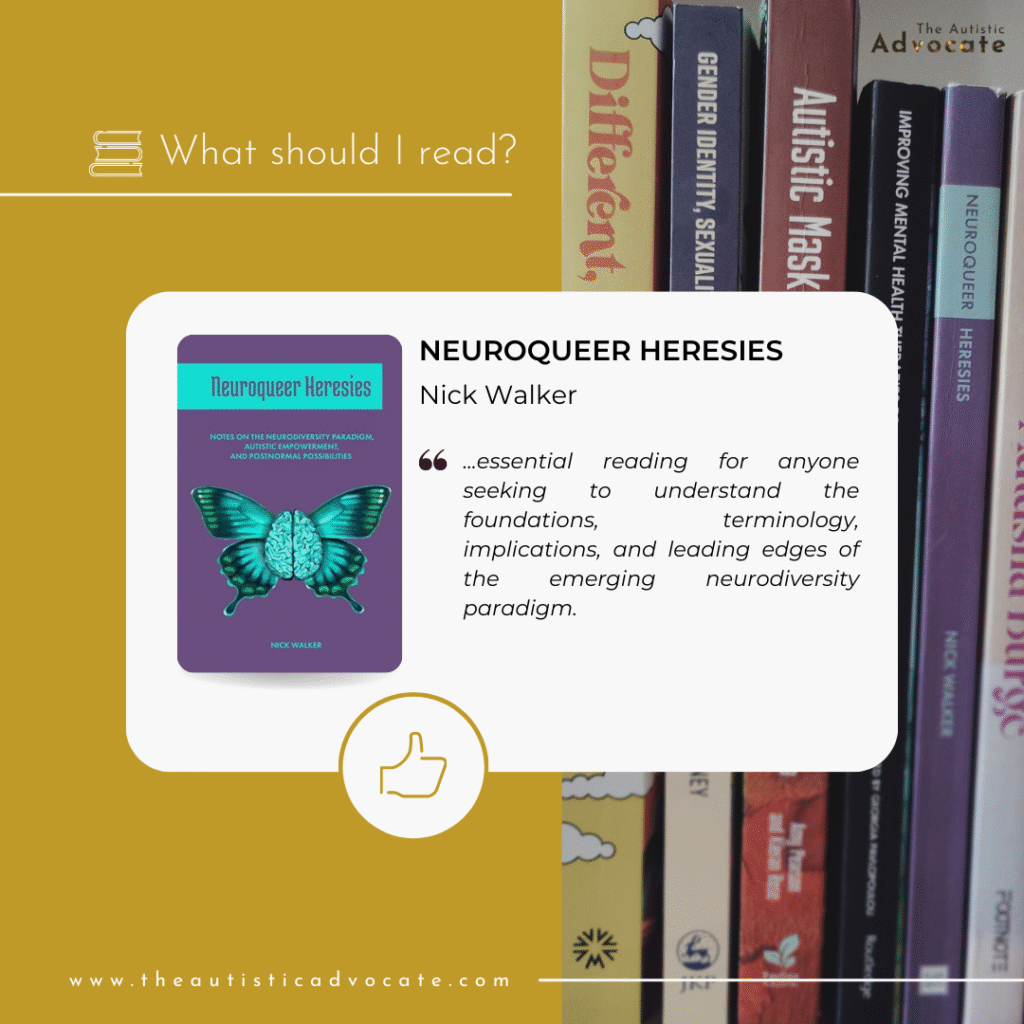
- Neuroqueer Heresies: Notes on the Neurodiversity Paradigm, Autistic Empowerment, and Postnormal Possibilities – Nick Walker
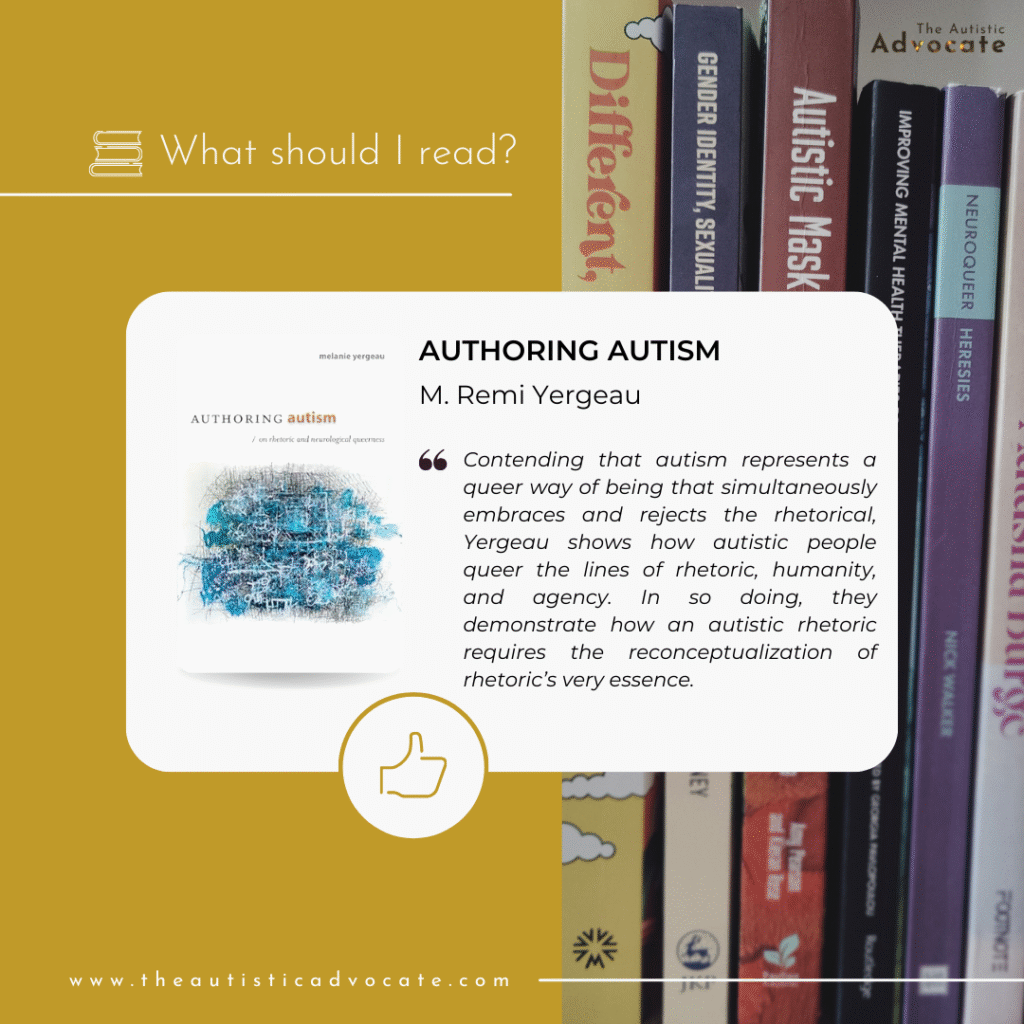
- Authoring Autism – M. Remi Yergeau
The Autism Industrial Complex: How Branding, Marketing, and Capital Investment Turned Autism into Big Business – Alicia Broderick
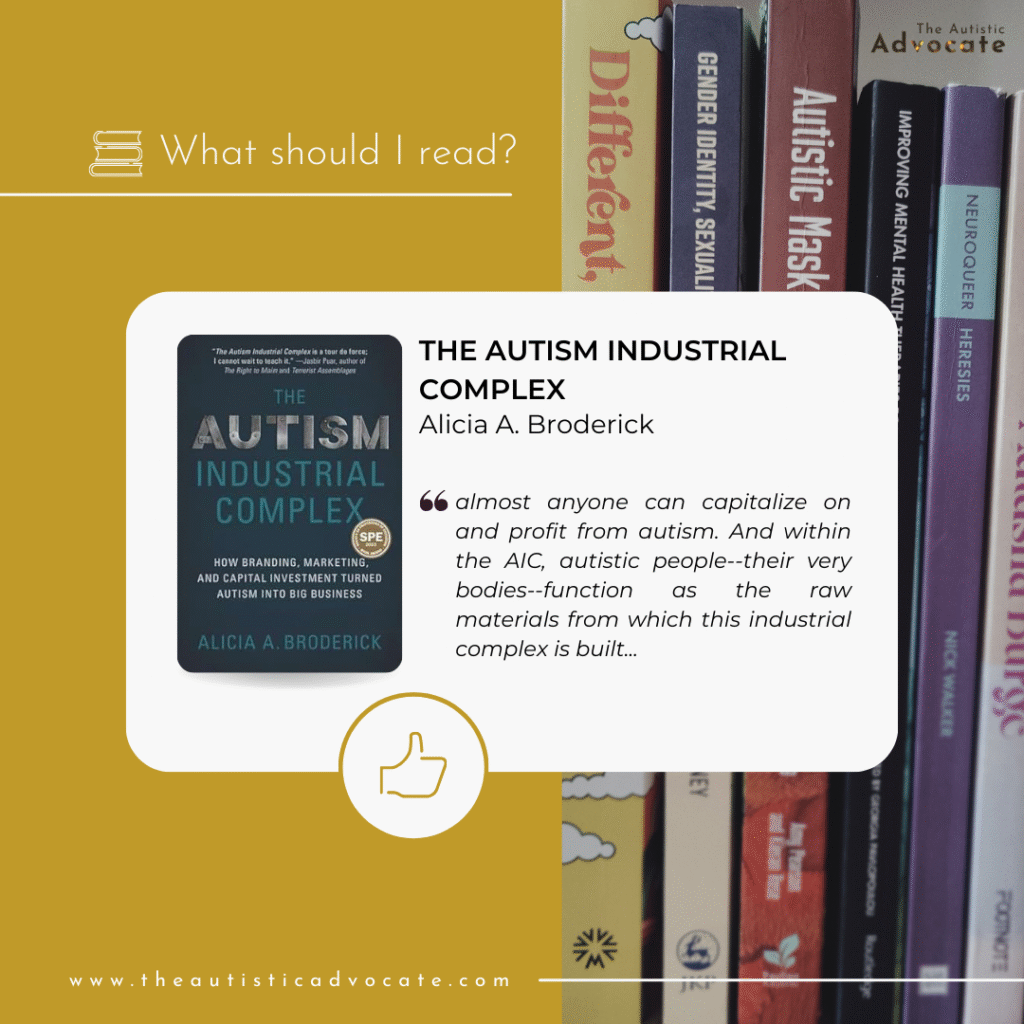
BOOK DESCRIPTION:
Within capitalism, the Autism Industrial Complex (AIC) produces both autism as commodity and the methods of intervention to deal with it. Comprised of ideological, rhetorical, material, and economic infrastructures, the AIC is not only a variety of businesses and industries that capitalize and profit from it. In the production of autism as commodity, the AIC also produces that commodity’s market, its consumers, and its monopoly control of that market through production for consumption of need for, consent to, and legitimacy of interventionist logics. Given this, almost anyone can capitalize on and profit from autism. And within the AIC, autistic people–their very bodies–function as the raw materials from which this industrial complex is built, even as their very identities and selves become unwitting, and often unwilling, products of the AIC. Autism, Inc. is essential reading for a variety of audiences, from healthcare providers to educators to parents.
Perfect for courses such as: Introduction to Critical Autism Studies; Disability Studies–Theory, Policy, Practice; Disability & Rhetoric; Disability & Cultural Studies; Doctoral Seminar in Disability Studies; Cultural Foundations of Disability in Education
BUY BOOK:
Understanding and Evaluating Autism Theory – Nick Chown

BOOK DESCRIPTION:
Addressing the full spectrum of theoretical output associated with autism and Asperger syndrome, this is the complete guide to autism theory – spanning from mainstream and alternative, through to non-autism specific theories that might be applied to autism.
Previous study on autism has made significant inroads into the individual branches of autism theory, however, no text has brought together the complete range of theories in an accessible textbook for students and academics. The author argues that a more obvious application of theory to autism intervention would be beneficial to practitioners. With access to the complete range of available autism and Asperger syndrome theory, from development theories to learning style theories, the academics and students working towards the practical application of theory to intervention will have all the necessary information at their disposal. The book is based on a series of autism theory lectures delivered for the NAS and Sheffield Hallam University.
BUY BOOK:
A Mismatch of Salience: Explorations of the Nature of Autism from Theory to Practice – Damian Milton

BOOK DESCRIPTION:
For more than a decade, Damian Milton has shared his insider views on the nature of autism. This book brings together for the first time a collection of essays and articles exploring the communication and understanding difficulties that can create barriers between people, and celebrating the diversity in our communication styles and experiences. Milton re-frames the view that people with autism represent a ‘disordered other’, and highlights how our current knowledge has been created by non-autistic people who are ‘on the outside, looking in’. He argues that communication difficulties are not due to impairment in one party, but rather to what he terms the double empathy problem A Mismatch of Salience.
BUY BOOK:
Critical Autism Studies – Damian Milton, Sara Ryan
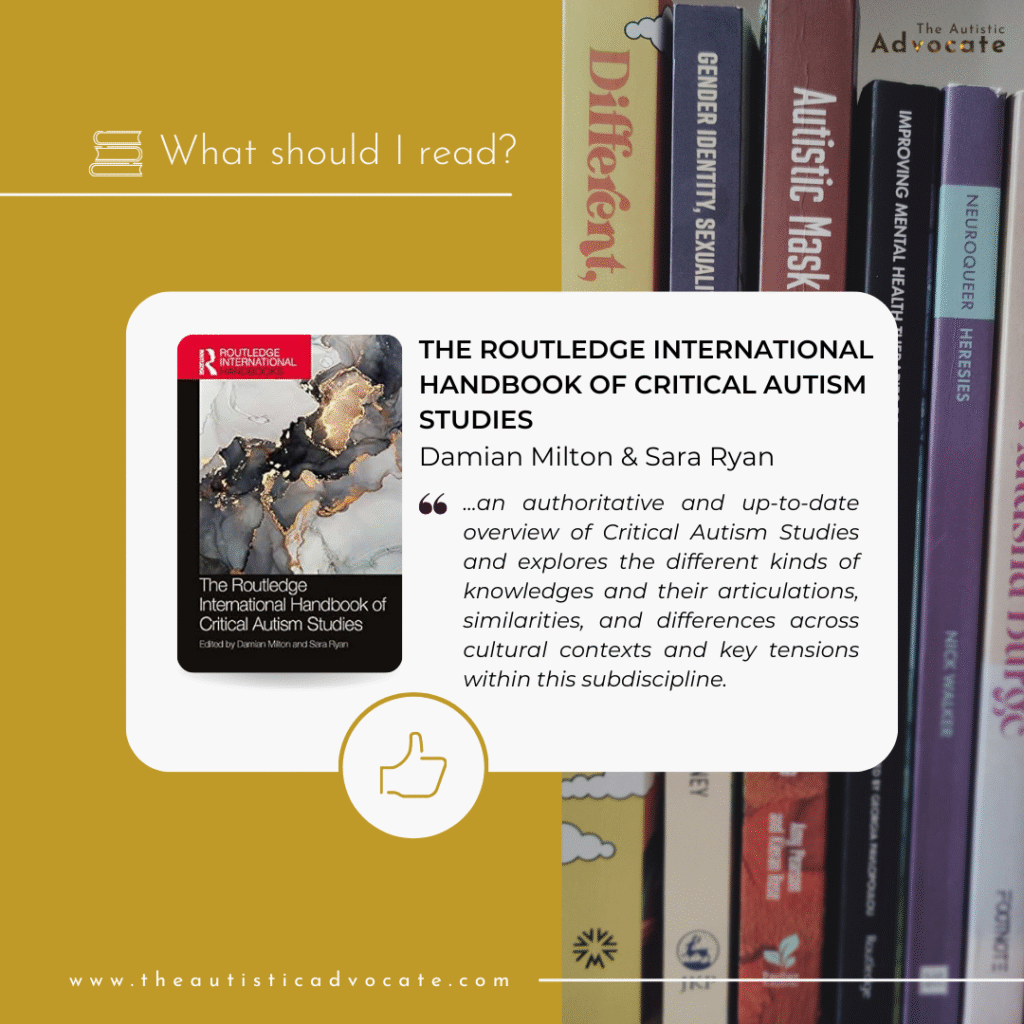
BOOK DESCRIPTION:
This handbook provides an authoritative and up-to-date overview of Critical Autism Studies and explores the different kinds of knowledges and their articulations, similarities, and differences across cultural contexts and key tensions within this subdiscipline.
Critical Autism Studies is a developing area occupying an exciting space of development within learning and teaching in higher education. It has a strong trajectory within the autistic academic and advocate community in resistance and response to the persistence of autism retaining an identity as a genetic disorder of the brain.
Divided into four parts; Conceptualising autism, Autistic identity, Community and culture and Practice
And comprising 24 newly commissioned chapters written by academics and activists, it explores areas of education, Critical Race Theory, domestic violence and abuse, sexuality, biopolitics, health, and social care practices.
It will be of interest to all scholars and students of disability studies, sociology, anthropology, cultural studies, education, health, social care, and political science.
BUY BOOK:
Neurodiversity Reader: Exploring Concepts, Lived Experience and Implications for Practice – Damian Milton
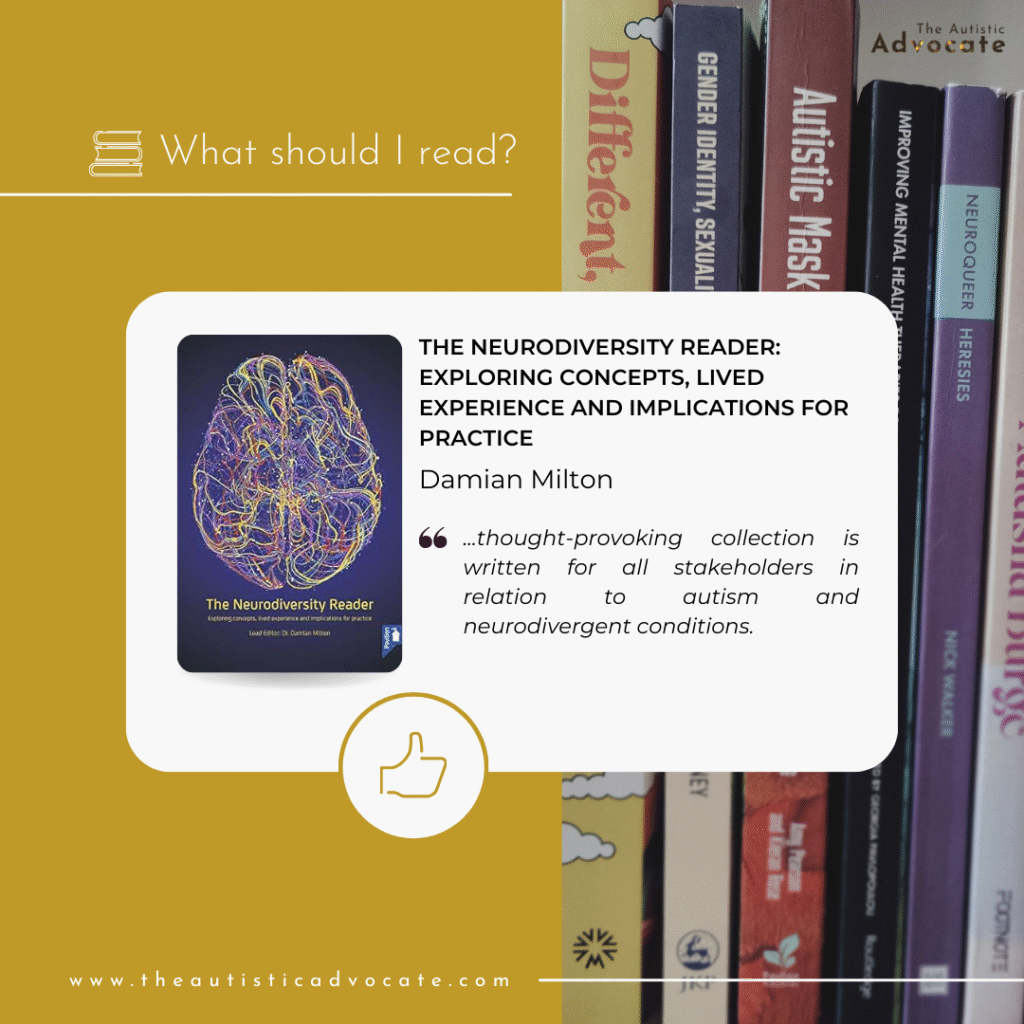
BOOK DESCRIPTION:
This thought-provoking collection is written for all stakeholders in relation to autism and neurodivergent conditions. Despite having wide impact on a variety of disciplines, neurodiversity and related concepts are often poorly understood, which can lead to uninformed debate and potential tensions between stakeholders regarding service provision for those with neuro-developmental disabilities. The Neurodiveristy Reader brings together work from pioneering figures within and beyond the neurodiversity movement to critically explore its history, the concepts of neurodiversity that have shaped it, lived experiences, and how a better informed understanding might be translated into practice and service provision. Through a variety of accounts, the relevance and criticisms of these concepts in understanding ourselves and one another are examined, as well as important implications for practice. A primary text for support professionals and students of neurodivergent experiences and disability, as well as neurodivergent people themselves.
BUY BOOK:
Autistic Masking: Understanding Identity Management and the Role of Stigma – Kieran Rose, Dr Amy Pearson
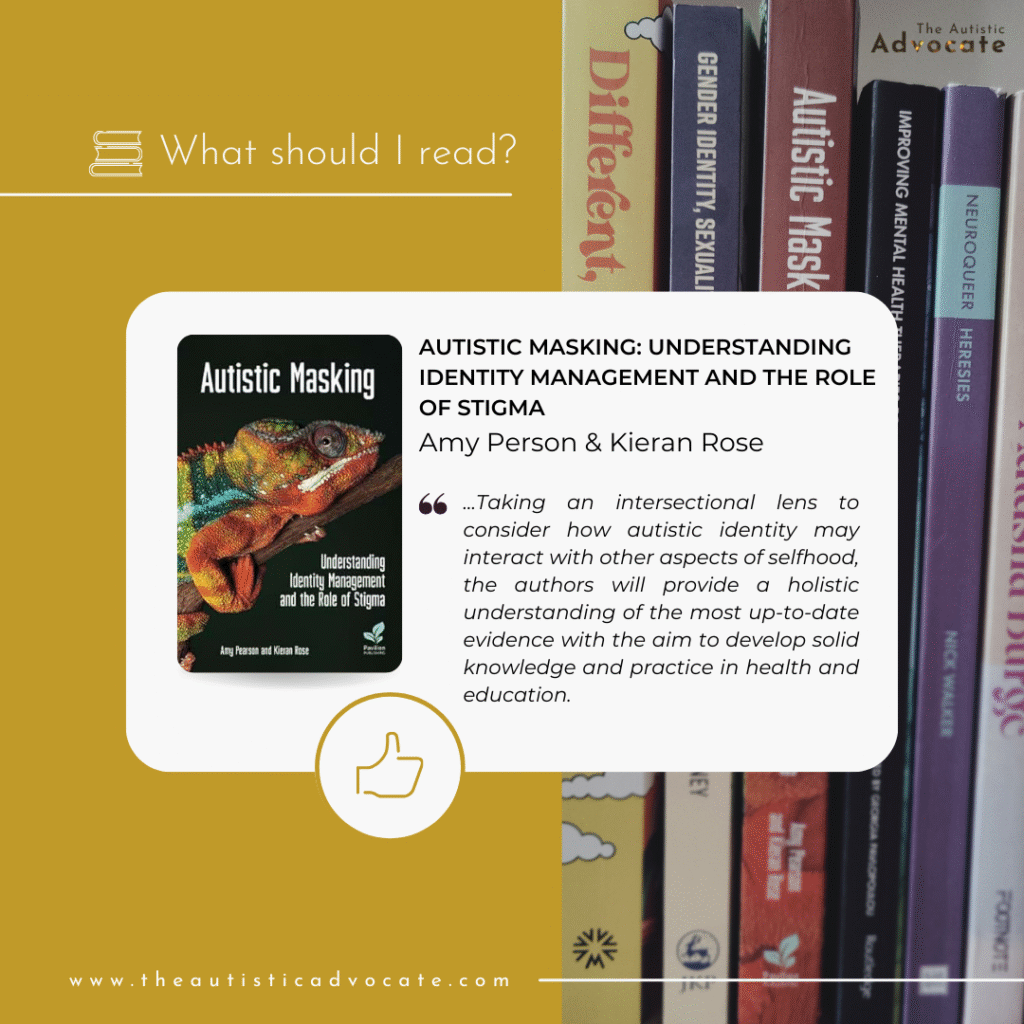
BOOK DESCRIPTION:
Masking is a form of identity management involving consciously or unconsciously suppressing aspects of identity and action. Often seen in socially marginalised groups, it is found to contribute towards poorer outcomes for autistic people, and is related to higher prevalence of suicidality, exhaustion and burnout, and mental health difficulties. Autistic Masking offers a holistic understanding of the most up-to-date evidence in this field, with the aim of developing solid knowledge and practice in health, education and society.
Written to be accessible to everyday readers with an interest in autism as well as academics and professionals, the book deconstructs the predominant misconception that masking is purely a social strategy to ‘blend in’ with neurotypical (non-autistic) people. The authors consider the social context that facilitates impression management, including an individual’s response to stigma or trauma, and take an intersectional approach to exploring how autistic identity may interact with other aspects of selfhood.
BUY BOOK:
MORE ON AUTISTIC MASKING:
My book with Dr Amy Pearson has a dedicated page on my website: Autistic Masking Book. I have a whole page of information and resources on Autistic Masking and Autistic Burnout on my website too: Autistic Masking Resources
Neurodiversity Studies: A New Critical Paradigm – Hanna Rosqvist, Nick Chown, Anna Stenning
BOOK DESCRIPTION:
Building on work in feminist studies, queer studies and critical race theory, this volume challenges the universality of propositions about human nature, by questioning the boundaries between predominant neurotypes and ‘others’, including dyslexics, autistics and ADHDers.
This is the first work of its kind to bring cutting-edge research across disciplines to the concept of neurodiversity. It offers in-depth explorations of the themes of cure/prevention/eugenics; neurodivergent wellbeing; cross-neurotype communication; neurodiversity at work; and challenging brain-bound cognition. It analyses the role of neuro-normativity in theorising agency, and a proposal for a new alliance between the Hearing Voices Movement and neurodiversity. In doing so, we contribute to a cultural imperative to redefine what it means to be human. To this end, we propose a new field of enquiry that finds ways to support the inclusion of neurodivergent perspectives in knowledge production, and which questions the theoretical and mythological assumptions that produce the idea of the neurotypical.
Working at the crossroads between sociology, critical psychology, medical humanities, critical disability studies, and critical autism studies, and sharing theoretical ground with critical race studies and critical queer studies, the proposed new field – neurodiversity studies – will be of interest to people working in all these areas.
BUY BOOK:
NeuroTribes: The Legacy of Autism and How to Think Smarter About People Who Think Differently – Steve Silberman
BOOK DESCRIPTION:
What is autism: a devastating developmental condition, a lifelong disability, or a naturally occurring form of cognitive difference akin to certain forms of genius? In truth, it is all of these things and more – and the future of our society depends on our understanding it.
Following on from his groundbreaking article ‘The Geek Syndrome’, Wired reporter Steve Silberman unearths the secret history of autism, long suppressed by the same clinicians who became famous for discovering it, and finds surprising answers to the crucial question of why the number of diagnoses has soared in recent years.
Going back to the earliest autism research and chronicling the brave and lonely journey of autistic people and their families through the decades, Silberman provides long-sought solutions to the autism puzzle while casting light on the growing movement of ‘neurodiversity’ and mapping out a path towards a more humane world for people with learning differences.
BUY BOOK:
Neuroqueer Heresies: Notes on the Neurodiversity Paradigm, Autistic Empowerment, and Postnormal Possibilities – Nick Walker
BOOK DESCRIPTION:
The work of queer autistic scholar Nick Walker has played a key role in the evolving discourse on human neurodiversity.
Neuroqueer Heresies collects a decade’s worth of Dr. Walker’s most influential writings, along with new commentary by the author and new material on her radical conceptualization of Neuroqueer Theory.
This book is essential reading for anyone seeking to understand the foundations, terminology, implications, and leading edges of the emerging neurodiversity paradigm.
BUY BOOK:
Authoring Autism – M. Remi Yergeau
BOOK DESCRIPTION:
In Authoring Autism M. Remi Yergeau defines neurodivergence as an identity—neuroqueerness—rather than an impairment. Using a queer theory framework, Yergeau notes the stereotypes that deny autistic people their humanity and the chance to define themselves while also challenging cognitive studies scholarship and its reification of the neurological passivity of autistics. They also critique early intensive behavioral interventions—which have much in common with gay conversion therapy—and questions the ableist privileging of intentionality and diplomacy in rhetorical traditions. Using storying as their method, they present an alternative view of autistic rhetoricity by foregrounding the cunning rhetorical abilities of autistics and by framing autism as a narrative condition wherein autistics are the best-equipped people to define their experience. Contending that autism represents a queer way of being that simultaneously embraces and rejects the rhetorical, Yergeau shows how autistic people queer the lines of rhetoric, humanity, and agency. In so doing, they demonstrate how an autistic rhetoric requires the reconceptualization of rhetoric’s very essence.
BUY BOOK:
Further Reading
I also have an article covering my Top 10 Non-Academic books about Autism.
I also highly recommend the essay “”…these thousands of little witnesses…” by Julia Lee Barclay Morton on her ‘Songs for the Unadapted Ones’ Substack. Many of the books which have guided and supported me over the years have done the same for Julia and Julia has woven such a beautiful story of her journey through these books that I highly recommend reading it. It is a lyrical, emotive and beautiful piece of writing.
RECOMMENDED AUTISM POSITIVE BOOKS EBOOK/CATALOGUE: $7.50/£5.50/€6,50

My catalgue/ebook contains 180+ books and makes for a really nice way to browse them all. You can click the image or this link to find out more.
You receive the catalogue as a full colour, beautifully designed ebook which you can save to any device to read and/or print. The two Top 10 lists from this article are also contained inside the catalogue.
The catalogue has images for each book, a full description and useful categories so you can see what each book is about.
There are also useful links for each book directly to Amazon UK and my Bookshop store so you can easily purchase a book you want. You also receive an ‘at a glance’ spreadsheet which lists all of the books in a much simpler format.
I aim to keep the catalogue fully up-to-date (so far it has had 10 updates) and once you purchase you get all future versions FOR FREE.
How do I choose the books for my recommended autism books list?
I will only add books to the lists (that’s the main list of Autism Positive Books and the Top 10 Lists) once I’ve had read them and/or used them for reasearch purposes.
I do gets lots of requests from authors to add their books to this list and often I’ve already bought their book but have yet to read it. A book won’t be added until I’ve read/used it. Please be kind if you’re an author and find yourself in this position; I’ve got limited time to read and this list has been literally years in the making!
Sometimes a book in on the list before it has been published and that is usually because I’ve received a pre-publication copy.
If you’ve found this article useful you can support my work by donating any amount from $3 (about the same as a coffee – mine’s a caramel latter please!).
I know not everyone wants, or needs, one of my training courses, but I often find people will read one of my free articles and want to say ‘thank you’. And this is a really easy way to do that. It also supports me to keep being able to create new, free content and keep my older, free content up-to-date. It also allow me to keep my website ad-freel My Autism FAQs page is a good place to start if you’re new to my work and want to explore more.
Thanks for you support – it means the absolute world. Kieran x
JOIN KIERAN’S MAILING LIST (for infrequent, but useful, updates!)
And, as a thank you for joining, you’ll get a 10% off code emailed to you which you can use on Kieran’s on-demand autism training and ebooks (including the Recommended Autism Books catalogue).
You might also be interested in my online, on-demand autism training
I have a full range of autism affirming, on-demand training available on my website: Browse Online Autism Training

Got more questions about Autism?
If reading this article has given you more questions then my Autism FAQs is a great place to point you in the right direct to get answers (and most of where I direct you is to free-to-access resources!).
